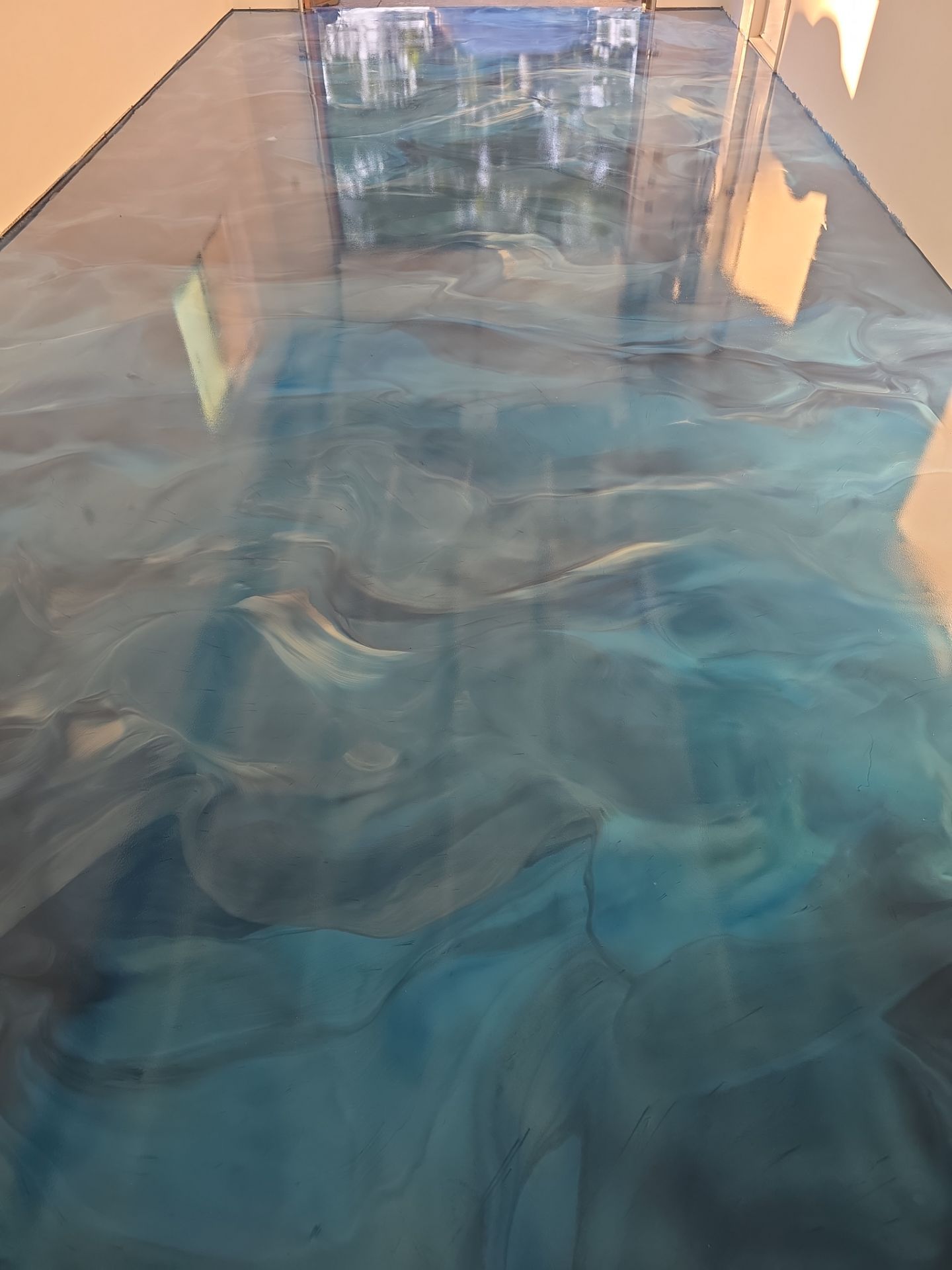
If you're shopping for a garage floor coating in San Luis Obispo County, two words come up again and again: polyurea and epoxy. Both are professional-grade, both blow away the DIY kits at the big-box store — but they are not the same. The difference shows up a few summers down the road, when one floor still looks new and the other has yellowed, peeled, or lifted under your tires. Here is the honest comparison.
The Short Answer
For a residential garage on the Central Coast, a polyurea-based system wins for most homeowners. It cures faster, stays color-stable in the sun, and flexes instead of cracking under hot tires. Epoxy still has its place — mostly in heavy-build commercial settings — but for the typical SLO County garage, polyurea is the longer-lasting choice. Here is why.
What Is Epoxy?
Epoxy is a two-part resin — a resin and a hardener you mix together to trigger a chemical reaction. It has been the industrial flooring standard for decades, and a properly installed epoxy floor is genuinely tough and chemical-resistant.
The trade-offs show up over time. Epoxy cures slowly — a real install usually needs several days before the garage is back in full use. It is also more rigid, which makes it prone to "hot-tire pickup" (the coating lifts where hot tires sit), and many epoxy formulas yellow or chalk under UV light. That is a real issue in sunny California garages with windows or open doors. The cheap DIY epoxy kits are the worst offenders — thin, with no proper concrete prep — and they are notorious for peeling and lifting.
What Is Polyurea — and Where Does Polyaspartic Fit?
Polyurea is a family of high-performance coatings known for flexibility, impact resistance, and fast cure. Polyaspartic is a specific, premium type of polyurea used as a clear topcoat because it is UV-stable and extremely hard-wearing.
At MGP Coatings we do not install a single coat of anything. We install Simiron’s SIMFLAKE SB 1-Day Polyurea system — a three-layer build: a tough polyurea basecoat, a decorative chip broadcast in your choice of 33 color blends, and a polyaspartic HS topcoat that locks it all in. The finished system runs over 50 mils thick, and Simiron has manufactured these coatings in the USA since 1992.
Polyurea vs. Epoxy, Head to Head
Cure Time & Return to Service
Polyurea wins. Our system is a same-day install — you can walk on it the next day, and the garage is ready for vehicles after about five days. Epoxy typically needs several days just for light foot traffic, and longer before you can move everything back in. When you want your garage back quickly, polyurea is the clear winner.
UV Stability (Will It Yellow?)
Polyurea wins. The polyaspartic topcoat is UV-resistant and stays color-stable, so your floor looks the same in year three as it did on install day. Many epoxy systems yellow or chalk under sunlight — a common complaint in garages that get direct light.
Hot-Tire Pickup
Polyurea wins for residential garages. Because polyurea and polyaspartic flex instead of staying rigid, they handle the heat and pressure of hot tires without lifting. Epoxy’s rigidity is exactly what makes hot-tire pickup more likely.
Durability & Maintenance
Both are tough, but the polyaspartic topcoat is chemical-resistant, resists abrasion and scratches, and is easy to maintain — oil, road salt, and dropped tools wipe right up. The decorative chip also hides dirt and minor surface imperfections, so the floor stays looking sharp with almost no effort.
Where Epoxy Still Makes Sense
Honesty matters: epoxy is not "bad." For high-build commercial jobs — warehouses, mechanic bays, anywhere you need 20-plus mils of impact protection on the substrate — a high-build epoxy or hybrid system can be the right call. For a residential SLO County garage, though, the polyurea system is what we recommend and install.
The Part Nobody Talks About: Prep
Here is the truth that decides whether ANY coating lasts: the prep. We diamond grind every floor to open the concrete’s pores so the coating bonds mechanically — not just sits on top. We pre-repair cracks with a polyurea filler and add a moisture vapor barrier when the slab needs it. A premium coating over bad prep will still fail; budget prep is the number-one reason floors peel.
Why SLO County Homeowners Choose MGP
MGP Coatings is a family-owned, San Luis Obispo County coating company with 30+ years of trade experience and 101 five-star Google reviews. We are licensed (CA License #1061424), every quote is done on-site because every slab is different, and we install an industrial-grade, made-in-USA system built to last.
Get Your On-Site Quote
If you are in San Luis Obispo, Paso Robles, Atascadero, Pismo Beach, or anywhere across SLO County and you want a garage floor that still looks new years from now, call MGP Coatings at (805) 952-5301 or request your free on-site estimate. We will measure your space, walk you through the 33 color blends, and give you a real number — no pressure.
Related Service
Garage Floor Coatings
Transform your garage with durable, beautiful epoxy and polyurea systems with a polyaspartic top coat that resist stains, chemicals, and daily wear. Most projects completed in 1-2 days across San Luis Obispo County.
Learn MoreLimited Time Offer
Free On-Site Estimate
Available This Month
Lock in your free on-site estimate this month. No pressure, no obligation — just an honest conversation with Matt about your project.
Free on-site estimates available throughout San Luis Obispo County. One estimate per household.